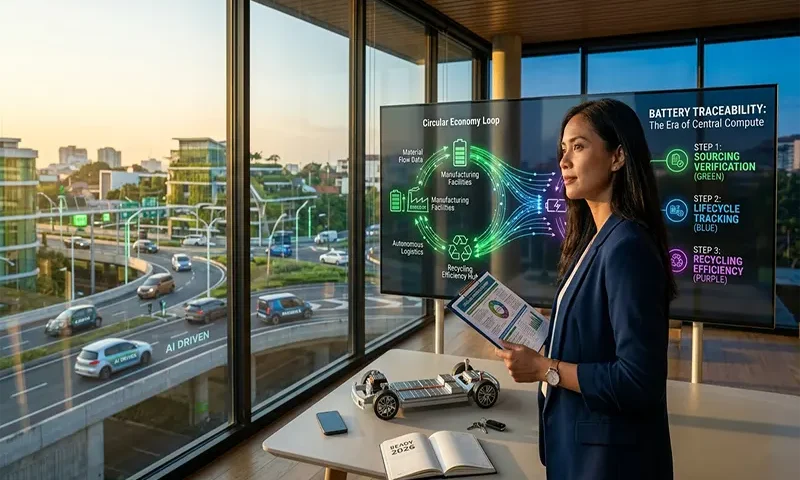
Circular Material Economy and Battery Traceability in Automotive Supply Chains: The 2026 Readiness Report

As of April 2026, the automotive industry has entered the “final sprint” toward a truly circular material economy. With the EU Battery Regulation (Article 77) mandate for Digital Battery Passports set to take effect on February 18, 2027, this year represents the critical implementation phase for global OEMs. The transition from a linear “take-make-waste” model to a closed-loop system is no longer a corporate social responsibility (CSR) goal; it is a hard requirement for market access and long-term resource security.

The 2026 landscape is defined by the integration of blockchain-backed traceability, breakthroughs in hydrometallurgical recycling, and the strategic navigation of shifting Western trade policies.

1. The Anatomy of the 2027 Battery Passport

The “Digital Product Passport” (DPP) is the digital backbone of the circular economy. In 2026, manufacturers are finalizing the data infrastructure required to satisfy the 80+ specific attributes mandated by the E.U.

  • N-Tier Visibility: Under Articles 49–52
Software-Defined Vehicle Architectures and AI Integration in 2026: The Era of Central Compute

The Consumer Electronics Show (CES 2026) marked a definitive turning point for the automotive industry. The “Software-Defined Vehicle” (SDV) has moved out of the experimental lab and into full-scale industrialization. In 2026, the car is no longer viewed as a mechanical assembly with added computers, but as a high-performance, AI-driven mobile data center.

This shift is underpinned by a radical restructuring of electronic architectures and the deep integration of Agentic AI, fundamentally changing how vehicles are built, operated, and experienced.

1. The Shift to Centralized and Zonal Compute

For decades, vehicles relied on a “distributed” model with over 100 independent Electronic Control Units (ECUs) managing specific functions like windows, brakes, or infotainment. In 2026, this model has officially collapsed under its own complexity.

The Death of the Standalone ECU

Leading OEMs, including BMW with its Neue Klasse and Mercedes-Benz with MB.OS, have transitioned to Centralized and

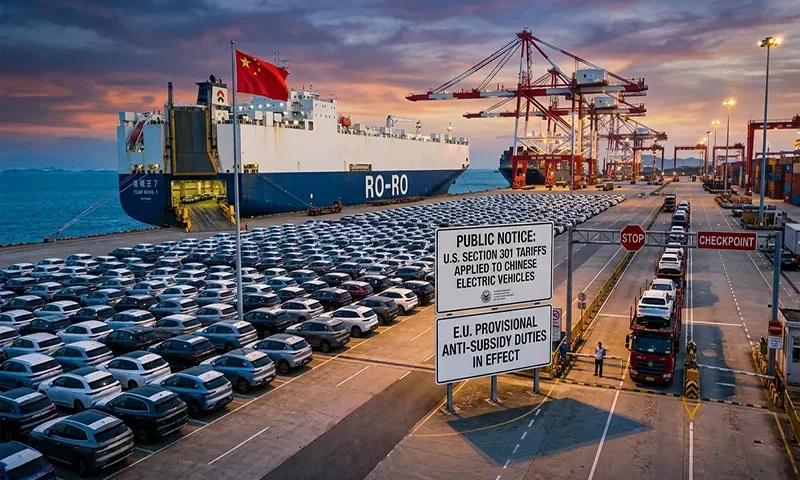
Impact of U.S. and E.U. Tariffs on Chinese EV Market Expansion: The Great Re-Routing of 2026

Entering 2026, the global automotive landscape is defined by a new geopolitical “Iron Curtain,” built not of concrete, but of import duties. The widely predicted “tsunami” of cheap Chinese Electric Vehicles (EVs) crashing onto Western shores has been halted, but not by market forces. Instead, a coordinated wall of protectionist tariffs, erected by the United States and the European Union, has forced a massive and historic re-calibration of China’s EV expansion strategy.

The era of direct, high-volume shipping from Shanghai to Los Angeles or Rotterdam is over. In its place, 2026 has given rise to a “Great Re-Routing,” characterized by localized manufacturing hubs within tariff zones, a strategic pivot to the “Global South,” and a complex, contentious exploitation of trade loopholes. The West may have “fortressed” its domestic markets, but it has not stopped the global expansion of Chinese EV dominance.

1. The Tariff Wall: 2026 Status Report

The current …

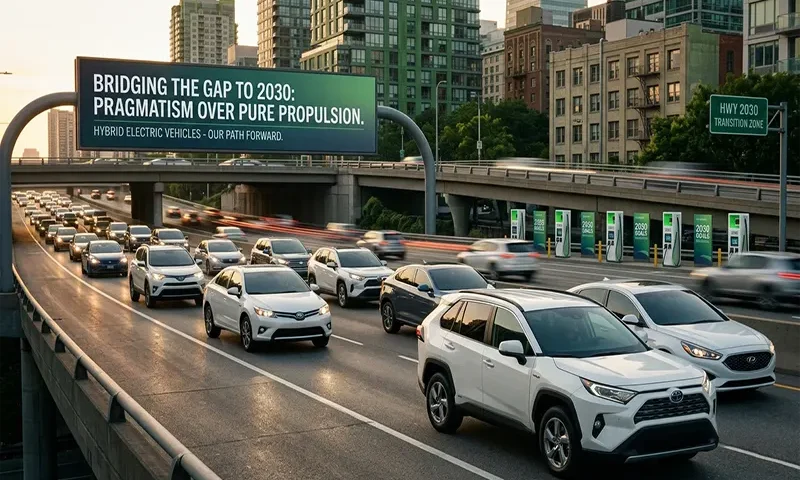
The Rise of Hybrid Electric Vehicles as a Bridge to 2030: Pragmatism Over Pure Propulsion

In the early 2020s, the automotive narrative was singular: the future is all-electric, and the internal combustion engine (ICE) is a relic of the past. However, as we move through 2026, a significant re-calibration is underway. Global automakers like Ford, GM, and Mercedes-Benz have pivoted their aggressive “EV-only” timelines toward a more diversified fleet. In this new landscape, the Hybrid Electric Vehicle (HEV) and the Plug-in Hybrid (PHEV) have emerged not as a compromise, but as a strategic “bridge” to 2030.

This shift represents a transition from idealistic ambition to industrial pragmatism. While the destination remains zero-emission transport, the path is being paved with hybrid technology that meets the consumer where they are today.

1. Infrastructure vs. Ambition: Solving the “Charging Anxiety”

The primary hurdle for Battery Electric Vehicles (BEVs) remains the uneven rollout of charging infrastructure. While urban centers boast dense networks of fast chargers, rural and suburban regions …

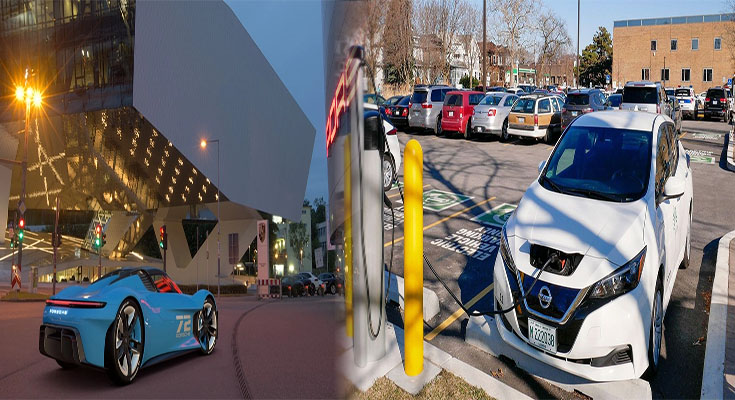
Driving into the Future: Unveiling the Growth of the Luxury Car Market

The luxury car market is gearing up for a period of robust expansion and transformation as discerning consumers seek premium features, cutting-edge technology, and exclusive experiences in their vehicles. From sleek designs and superior performance to advanced safety features and autonomous capabilities, luxury automakers are at the forefront of innovation, catering to the evolving demands of affluent buyers. Let’s delve into the dynamics fueling the growth of the luxury car market and the trends shaping the landscape of high-end automotive craftsmanship.

Evolving Consumer Preferences

The growth of the luxury car market is intricately linked to evolving consumer preferences and lifestyle choices. Affluent buyers are increasingly prioritizing comfort, performance, and status symbols when selecting their vehicles, prompting luxury automakers to elevate their offerings to meet these demands. From opulent interiors and state-of-the-art infotainment systems to bespoke customization options and sustainable materials, the modern luxury car embodies a fusion of style, sophistication, …