
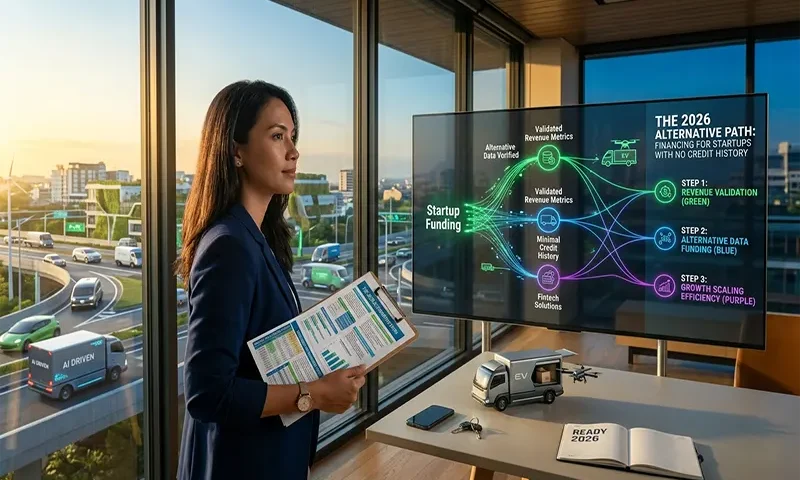
Business Vehicle Finance Options for Startups with No Credit History: The 2026 Alternative Path
Launching a fleet-based startup in 2026 without a corporate credit history requires a shift from traditional banking to the “Alternative Lending” ecosystem. While legacy banks often demand two years of audited financials and a seasoned credit profile, modern fintechs and Asset-Backed Lenders (ABL) are increasingly using real-time data to underwrite the potential of a business rather than its past.
This guide explores how early-stage entrepreneurs can bypass the “no credit” hurdle by leveraging Open Banking, Collateral-Based Lending, and the evolving vehicle subscription market.
1. The “Chicken and Egg” Logistics Dilemma
The central challenge for any new logistics or service-based startup is the “Chicken and Egg” dilemma: you need a fleet to generate revenue, but traditional lenders require revenue to prove you can afford the fleet.
In 2026, the rise of Cash-Flow Underwriting has fundamentally changed this dynamic. Startups are no longer judged solely on a static FICO score. …

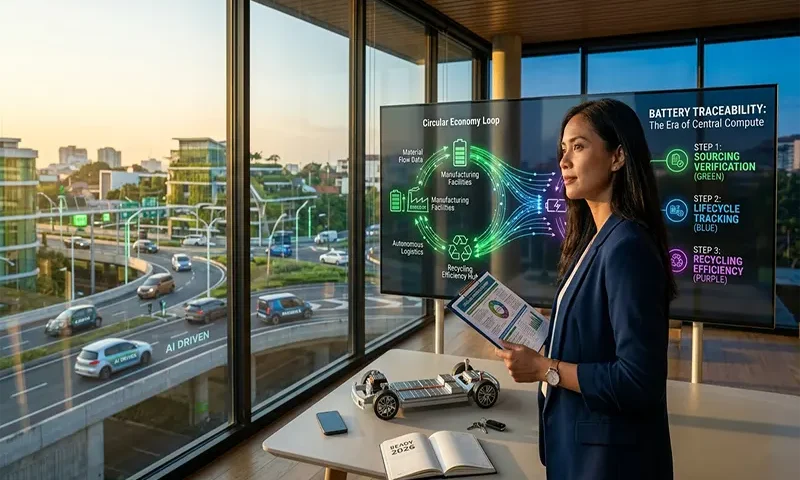
Circular Material Economy and Battery Traceability in Automotive Supply Chains: The 2026 Readiness Report
As of April 2026, the automotive industry has entered the “final sprint” toward a truly circular material economy. With the EU Battery Regulation (Article 77) mandate for Digital Battery Passports set to take effect on February 18, 2027, this year represents the critical implementation phase for global OEMs. The transition from a linear “take-make-waste” model to a closed-loop system is no longer a corporate social responsibility (CSR) goal; it is a hard requirement for market access and long-term resource security.
The 2026 landscape is defined by the integration of blockchain-backed traceability, breakthroughs in hydrometallurgical recycling, and the strategic navigation of shifting Western trade policies.
1. The Anatomy of the 2027 Battery Passport
The “Digital Product Passport” (DPP) is the digital backbone of the circular economy. In 2026, manufacturers are finalizing the data infrastructure required to satisfy the 80+ specific attributes mandated by the E.U.
- N-Tier Visibility: Under Articles 49–52
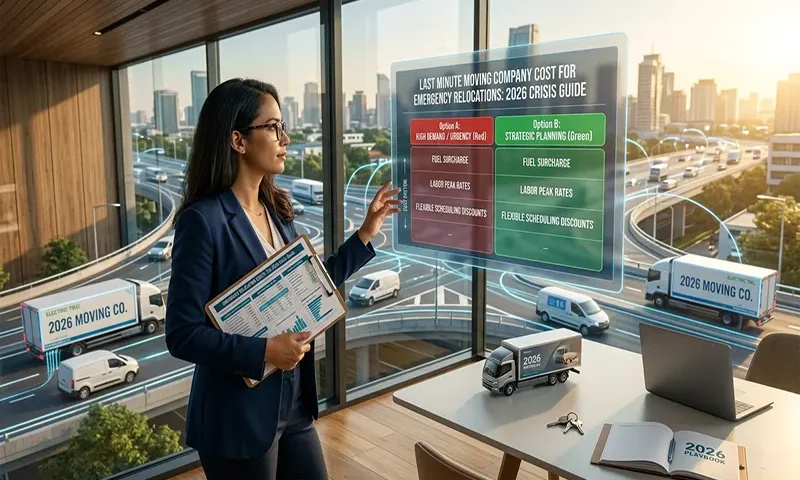
Last Minute Moving Company Cost for Emergency Relocations: The 2026 Crisis Guide
In the high-stakes environment of 2026, an “emergency relocation”—whether due to a sudden job transfer, a natural disaster, or a failed housing closing—requires a specialized financial strategy. While a standard local move currently averages $1,250, the premium for immediate service can transform your invoice overnight.
When you are forced to move with less than 7 days’ notice, you are no longer just paying for labor and transit; you are paying for the disruption of a company’s carefully optimized 2026 logistical schedule.
1. The Introduction: The Cost of Speed
In the moving industry, the “Emergency Window” is defined as any move booked with 72 hours or less notice. In 2026, where AI-driven scheduling keeps most reputable crews booked months in advance, finding an open truck on short notice is a rarity.
As of April 2026, emergency moves typically carry a 25% to 50% premium over standard rates. While you cannot …
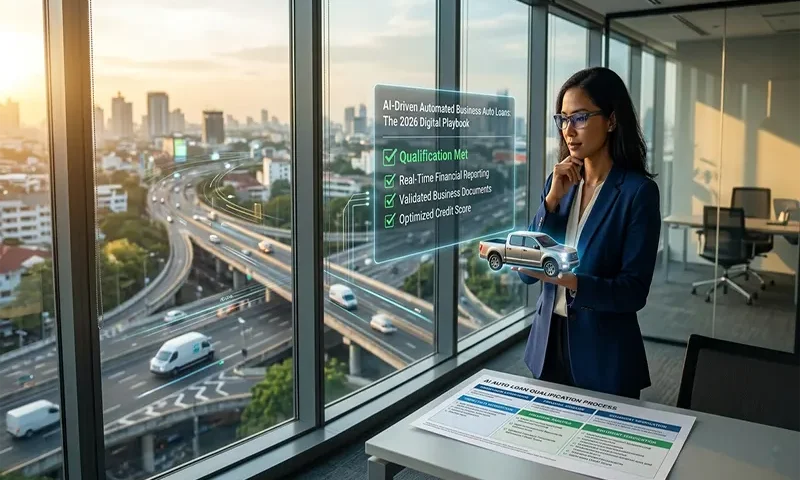
How to Qualify for AI-Driven Automated Business Auto Loans: The 2026 Digital Playbook
In 2026, the traditional bank meeting—complete with physical folders of tax returns and a nervous wait for a human loan officer—has become a relic of the past. Today, the capital for business fleets is governed by “Instant Decisioning” ecosystems. Leveraging Agentic AI, modern lenders like Chase, Wells Fargo, and specialized Fintechs now approve 95% of business auto loans in under 60 seconds.
However, speed does not mean the criteria are easier; they are simply different. AI lenders have moved beyond the static FICO score to “Dynamic Underwriting.” To qualify in this high-tech environment, your business needs to present a “machine-readable” profile that signals growth, stability, and digital transparency.
1. The Shift to Real-Time Underwriting
In the 2026 lending landscape, AI doesn’t just look at who you were last year; it looks at who you are today. Lenders now prioritize “Credit Velocity”—a measure of your real-time cash flow and …
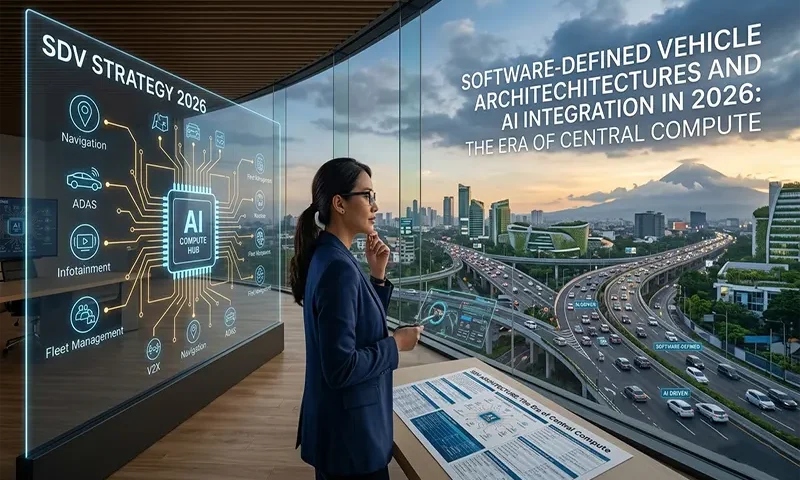
Software-Defined Vehicle Architectures and AI Integration in 2026: The Era of Central Compute
The Consumer Electronics Show (CES 2026) marked a definitive turning point for the automotive industry. The “Software-Defined Vehicle” (SDV) has moved out of the experimental lab and into full-scale industrialization. In 2026, the car is no longer viewed as a mechanical assembly with added computers, but as a high-performance, AI-driven mobile data center.
This shift is underpinned by a radical restructuring of electronic architectures and the deep integration of Agentic AI, fundamentally changing how vehicles are built, operated, and experienced.
1. The Shift to Centralized and Zonal Compute
For decades, vehicles relied on a “distributed” model with over 100 independent Electronic Control Units (ECUs) managing specific functions like windows, brakes, or infotainment. In 2026, this model has officially collapsed under its own complexity.
The Death of the Standalone ECU
Leading OEMs, including BMW with its Neue Klasse and Mercedes-Benz with MB.OS, have transitioned to Centralized and …