
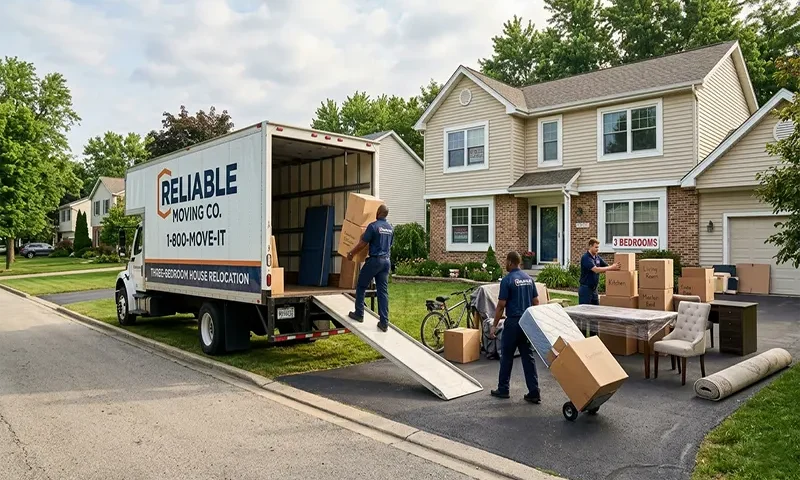
Moving a three-bedroom house is a major milestone, but it’s also the point where logistics transition from “manageable” to “massive.” By 2026 standards, a three-bedroom home typically contains between 8,000 and 12,000 pounds of belongings. Whether you are moving across the street or across the country, the scale of this inventory requires careful financial planning.
On average, homeowners in 2026 can expect to pay between $1,350 and $3,300 for a local move. However, if your journey crosses state lines, that figure can climb significantly, with long-distance averages ranging from $4,500 to $10,500+.
1. Local Moving Costs: Understanding the Hourly Model
For moves under 50 miles, moving companies almost exclusively use an hourly pricing model. In 2026, the average hourly rate for a professional crew ranges from $120 to $180 per hour, depending on your city’s cost of living and the season.
The Math of a 3-Bedroom Local Move
A typical three-bedroom house requires a crew of 3 to 4 movers and a 26-foot moving truck. For a standard home, the process—including loading, transit, and unloading—takes approximately 7 to 10 hours.
| Expense Item | Estimated Rate | Total (8 Hours) |
| Crew (4 Movers) | $160 / hr | $1,280 |
| Truck & Fuel Fee | Flat Rate | $150 – $300 |
| Basic Supplies | Tape/Blankets | $100 |
| Estimated Total | $1,530 – $1,680 |
Pro Tip: Beware of the “Travel Fee.” Most local movers add one hour of labor to the final bill to cover the time spent driving the truck from their warehouse to your home and back.
2. Long-Distance Moving Costs: Weight and Mileage
Once you cross the 50-to-100-mile threshold, hourly rates disappear. Long-distance movers calculate your estimate based on two primary factors: the total weight of your shipment and the distance to your destination.
Average 2026 Pricing by Distance (for 10,000 lbs)
- 500 Miles: $3,500 – $6,000
- 1,000 Miles: $5,500 – $8,500
- Coast-to-Coast (2,500+ Miles): $9,000 – $14,000+
In 2026, fuel surcharges have become more volatile, often adding 10% to 15% to the base “linehaul” (transportation) cost. Because a three-bedroom house has a high volume of furniture, your weight estimate is the most critical part of your quote.
Pro Tip: Request a Binding-Not-to-Exceed Estimate. This ensures that even if your items weigh more than the mover guessed, you won’t be charged extra. If they weigh less, you pay less.
3. The “Hidden” Cost Drivers
The base quote is rarely the final price. For a three-bedroom home, several add-on services can push your budget higher:
- Full-Service Packing: Professional packing for a 3-bedroom home usually costs between $800 and $1,500. This includes labor and materials (boxes, paper, bubble wrap).
- Specialty Items: Moving a piano, a gun safe, or a hot tub often incurs a “bulky item” fee of $200 to $600 per item due to the specialized equipment and extra labor required.
- Access Fees: If the moving truck cannot park within 75 feet of your door, you may be charged a “Long Carry” fee. Similarly, “Stair Fees” (usually $75–$150 per flight) apply if you are moving in or out of a multi-story home without an elevator.
- Valuation (Insurance): Basic “Released Value Protection” is free but only covers $0.60 per pound. For a 10,000-lb move, that’s only $6,000 in total coverage. Most experts recommend “Full Value Protection,” which typically costs about 1% of the total value of your goods.
4. Timing: The “When” is as Important as the “Where”
Moving costs are subject to supply and demand. In 2026, peak moving season remains May through September. During these months, rates can be 20% to 30% higher than in the winter.
- The Weekend Tax: Moving on a Friday or Saturday is significantly more expensive than a Tuesday or Wednesday.
- The Monthly Cycle: Avoid the first and last days of the month, as these coincide with lease turnovers and are the first to be booked at premium prices.
5. How to Slash Your 2026 Moving Bill
With the average cost of a 3-bedroom move hovering near $5,000, saving even a small percentage makes a difference.
- The “Purge” Strategy: Since long-distance moves are priced by weight, getting rid of an old heavy sofa or a dusty treadmill can save you hundreds in transport costs.
- Hybrid Moving: Consider “labor-only” services. You rent the truck (U-Haul/Penske) and hire professional movers just to load and unload. This can cut a local move’s cost by 40%.
- Source Free Materials: Reach out to local bookstores, liquor stores, or use community apps like “Buy Nothing” to source boxes. Packing materials for a 3-bedroom home can easily cost $400 if bought new.
Relocating a three-bedroom house in 2026 is a significant investment. While the national average sits around $4,800, your final price will fluctuate based on how much you own and how far you’re going. The best way to ensure an accurate budget is to obtain at least three in-home (or virtual) estimates. Seeing your space allows movers to spot potential “access fees” early, preventing expensive surprises on moving day.

