
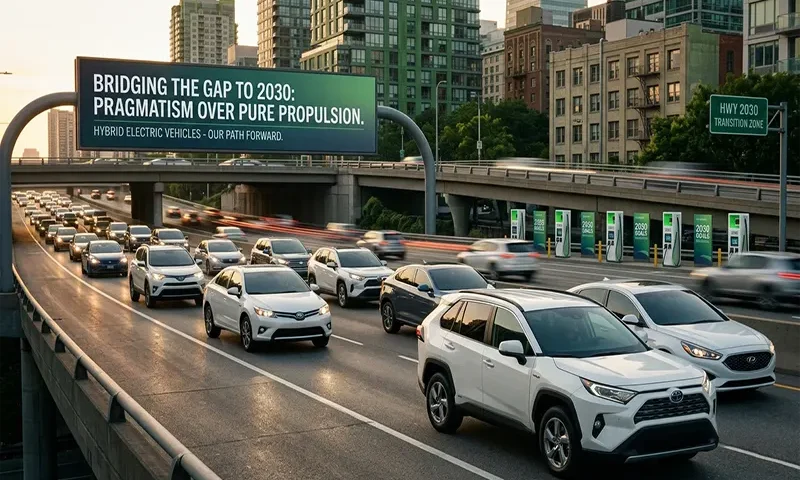
The Rise of Hybrid Electric Vehicles as a Bridge to 2030: Pragmatism Over Pure Propulsion
In the early 2020s, the automotive narrative was singular: the future is all-electric, and the internal combustion engine (ICE) is a relic of the past. However, as we move through 2026, a significant re-calibration is underway. Global automakers like Ford, GM, and Mercedes-Benz have pivoted their aggressive “EV-only” timelines toward a more diversified fleet. In this new landscape, the Hybrid Electric Vehicle (HEV) and the Plug-in Hybrid (PHEV) have emerged not as a compromise, but as a strategic “bridge” to 2030.
This shift represents a transition from idealistic ambition to industrial pragmatism. While the destination remains zero-emission transport, the path is being paved with hybrid technology that meets the consumer where they are today.
1. Infrastructure vs. Ambition: Solving the “Charging Anxiety”
The primary hurdle for Battery Electric Vehicles (BEVs) remains the uneven rollout of charging infrastructure. While urban centers boast dense networks of fast chargers, rural and suburban regions …
