
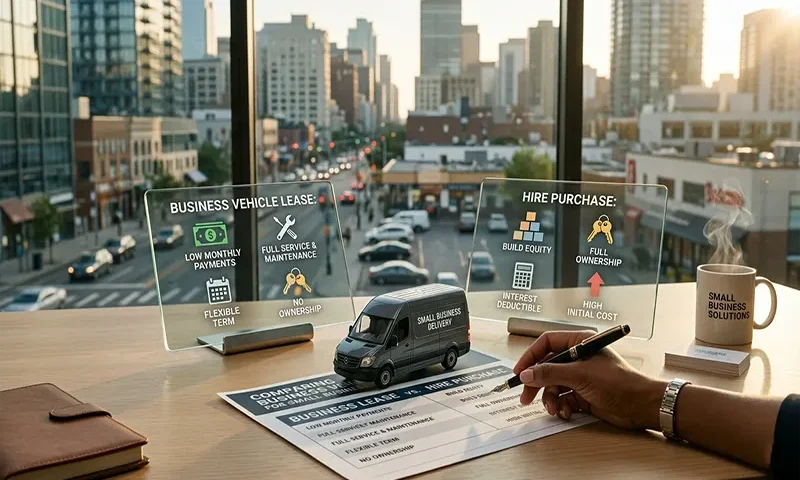
Comparing Business Vehicle Lease vs. Hire Purchase for Small Businesses
In the current 2026 economic climate, small business owners are facing a complex automotive market. With interest rates stabilizing at higher-than-historical averages and the rapid evolution of electric vehicle (EV) battery technology, the decision between “usership” and “ownership” has never been more consequential.
The passage of the One Big Beautiful Bill Act (OBBBA) in the U.S. and the recent HMRC capital allowance adjustments in the UK have redrawn the tax boundaries for vehicle acquisition. Deciding between a Business Contract Hire (Lease) and a Hire Purchase (HP) agreement is no longer just about monthly payments; it’s about strategic tax positioning and risk mitigation.
1. The Case for Leasing: The “Cash Flow” King
Leasing, or Business Contract Hire, is a “usership” model where you pay for the vehicle’s depreciation over a fixed term—usually 24 to 48 months—and return it at the end.
Why Leasing Wins in 2026
- The “Tech Hedge”: With 2030
